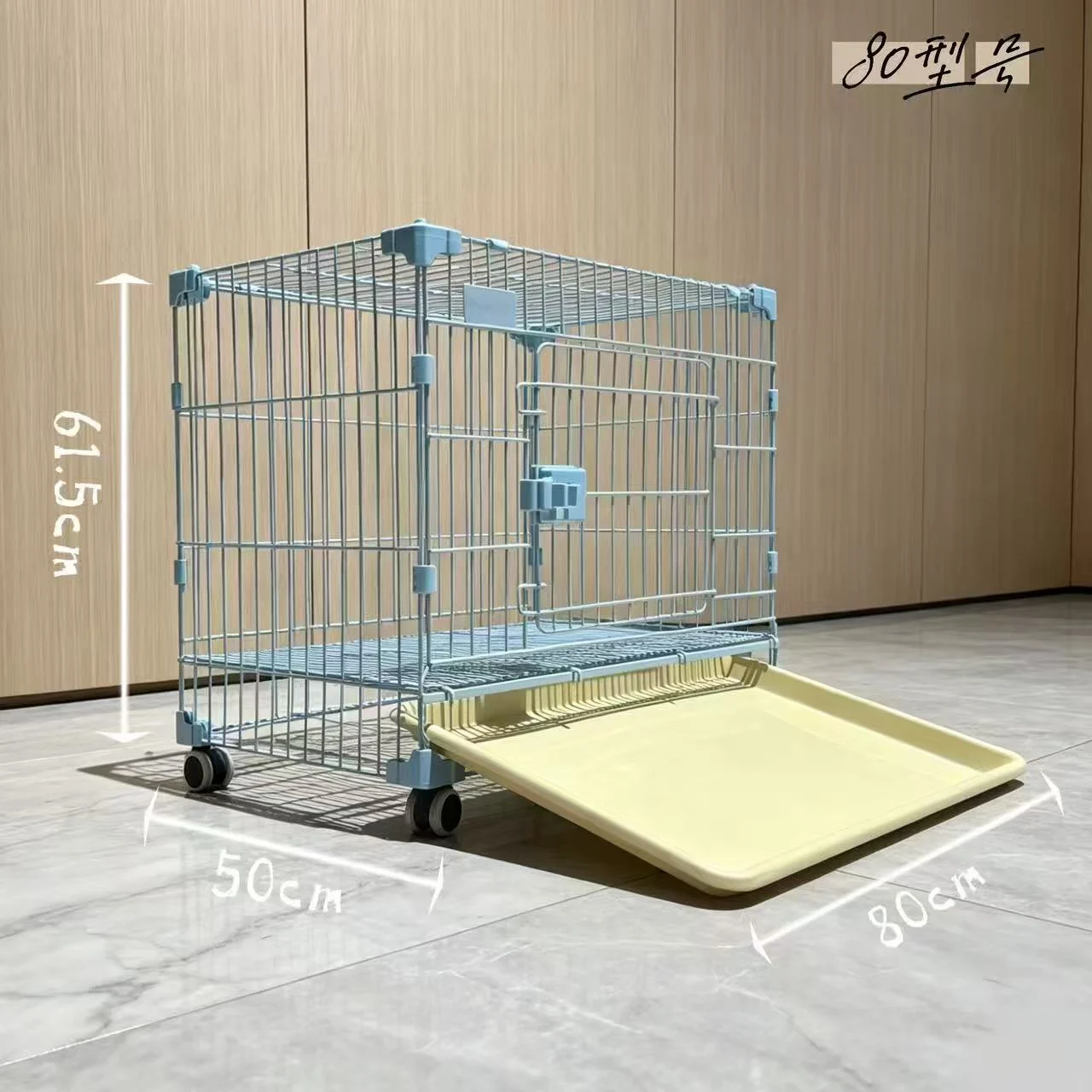
A model name such as 60, 70, or 80 is useful for ordering, but it is not enough for a wholesale decision. Buyers should work from verified assembled dimensions and packing data, then match those figures to retail, kennel, storage, and freight constraints.
Begin with the current wholesale dog cage catalog so each size decision refers to a real model, door type, assembled dimension, and carton record. This prevents a marketing size label from being mistaken for the exact usable or packed measurement.
Start with the verified assembled dimensions
The current range includes 60 × 55 × 43 cm, 68 × 58 × 47 cm, and 80 × 61.5 × 50 cm cages, listed as length × height × width in the supplied factory sheet. Do not convert these numbers into a pet-weight recommendation without a confirmed manufacturer standard and your own welfare requirements. Pet suitability depends on animal dimensions, posture, movement, local rules, and the intended length of confinement.
Check the packed carton before building a freight plan
One cage is packed per carton. The carton dimensions and gross weights vary by model and door style. These numbers influence pallet layout, container utilization, warehouse racking, courier limits, and landed cost. Request updated packing data if any wheel, tray, finish, or carton specification changes, because a small product revision can change the transport result.
Before calculating landed cost, use the export packing and QC checklist to define which carton measurements, packed weights, labels, protective materials, and evidence photos must be reconfirmed. Freight planning should use the approved packed version rather than an early product estimate.
Plan the assortment around real demand
Retail buyers may need a visible step-up between sizes; kennels may prioritize repeatable footprints; boarding facilities may care more about door operation and cleaning flow. Standard existing products can be ordered from 100 pcs. Use sales history to propose a size ratio, then ask the factory to confirm quantities for mixed sizes, door styles, OEM/ODM, or custom packaging. Separate the door-style decision from the size decision so the assortment remains understandable.
The channel also changes the preferred assortment. A pet store cage range may need an easy-to-explain size ladder, while kennel and boarding cage planning places more weight on aisle clearance, door operation, repeatable footprints, movement, and cleaning workflow.
Confirm details that are not in the basic sheet
Before placing an order, confirm internal usable space, wire diameter and spacing, finish and corrosion resistance, tray material, wheel specification, latch design, static load guidance, color options, labeling, carton strength, and assembly instructions. The current source material does not state all of these values, so a responsible quotation should mark them for confirmation instead of filling them with generic claims.
Create a version-controlled approval sheet
Put the approved product photo, assembled dimensions, net weight, door type, color, carton dimensions, gross weight, labels, marks, and inspection checkpoints into one document. Use the same revision for the purchase order, production confirmation, inspection, and shipping documents. This reduces the risk of the sales description and the production unit drifting apart.