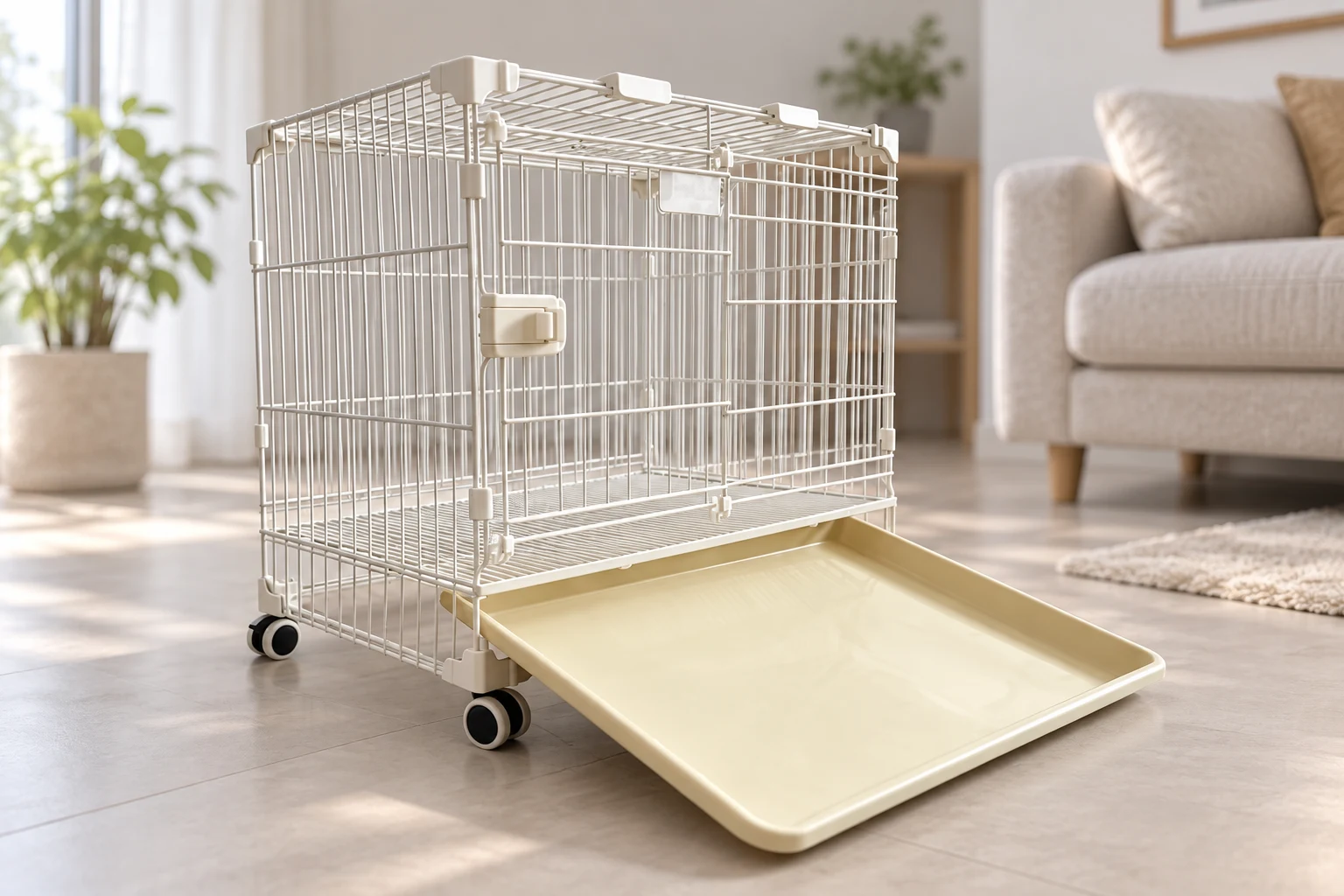
A white wire cage can look at home in a neutral interior, but an online buyer needs more than a lifestyle photograph. They need the correct measurements, a clear explanation of the door, and an honest account of the components included. Our 70-model sliding-door metal pet cage offers a specific product around which to build that information: a white wire enclosure, light-colored fittings, a removable tray and caster wheels.
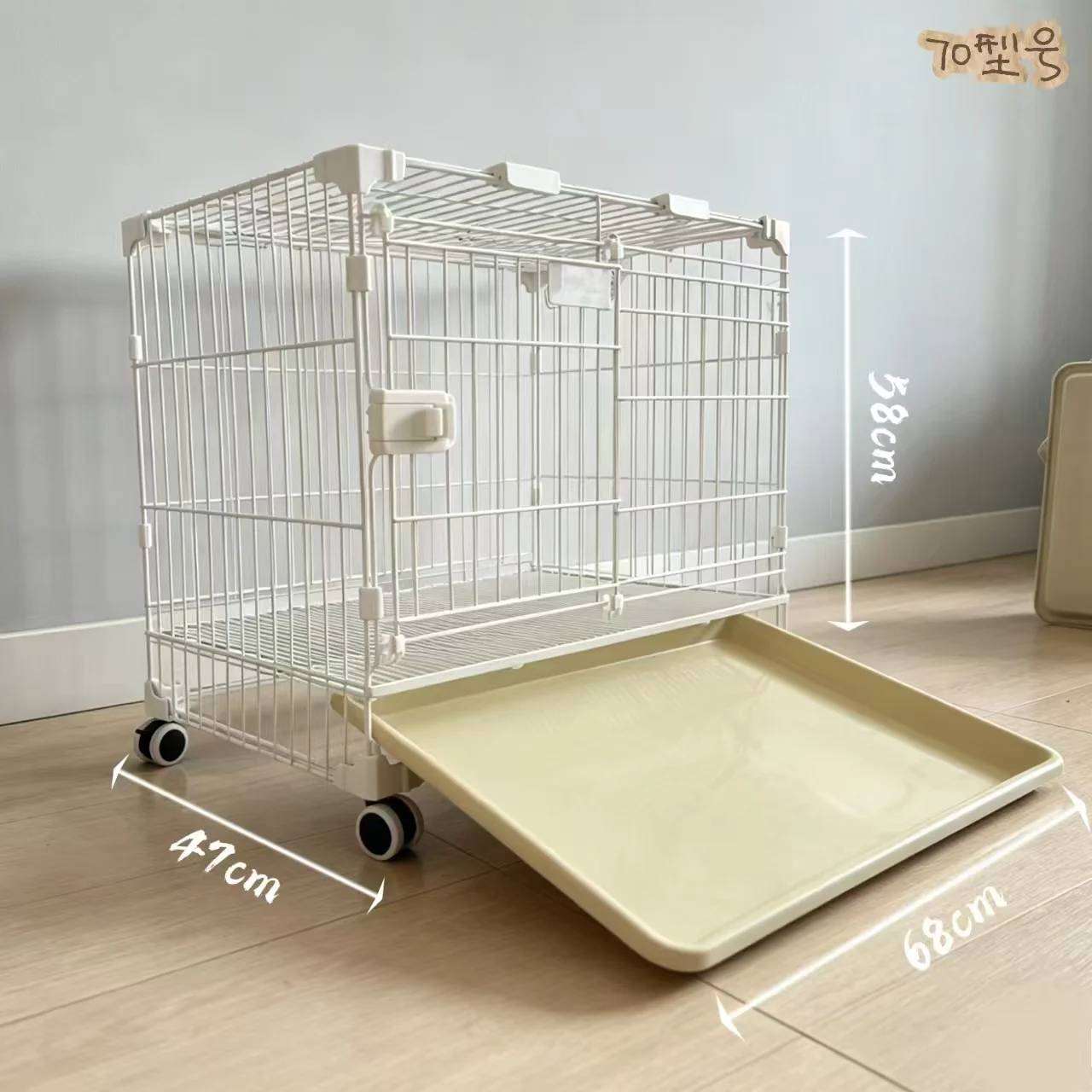
The first detail worth getting right is its name. The factory calls it the 70 model, while the listed overall length is 68 cm, not 70 cm. This spotlight introduces the 68 cm sliding-door metal pet cage for online pet-supply brands, with a focus on product presentation and a quotation brief that matches the actual model.
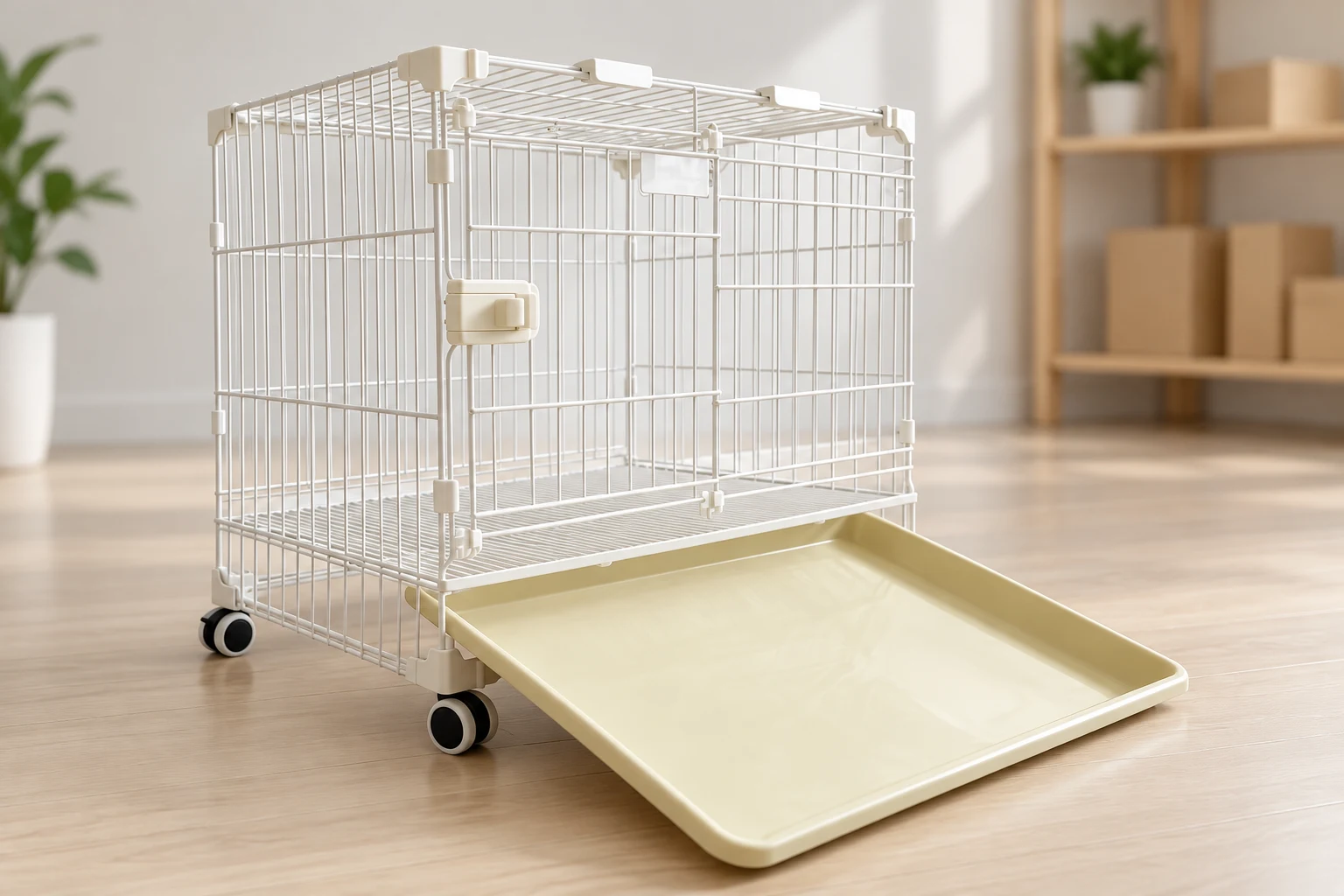
The cover and studio scene in this article are AI-generated from the supplied product photograph. They illustrate presentation settings, not real customer installations. The original photograph is also included below; use an approved physical sample to confirm exact details.
A defined product, not a generic white dog crate
The pictured model combines a white wire body with cream-colored connectors and a matching light tray. Its open wire appearance keeps the enclosure visually light, while the contrasting black-and-white wheels remain visible at the base. These are concrete visual characteristics an online brand can show without inventing a performance story.
The factory identifies the product as a sliding-door cage. The photograph shows its front panel and latch, but a still image cannot demonstrate the complete movement or locking sequence. Ask for a short video of the actual sample opening and closing before writing operating instructions. Do not describe it as a swing-door version simply because some front fittings look familiar.
The specification to put beside the photographs
- Model reference: 70-model sliding-door pet cage.
- Overall dimensions: 68 cm long × 47 cm wide × 58 cm high.
- Listed net weight: 9.2 kg.
- Listed gross weight: 9.9 kg.
- Packing: one unit per carton, with a listed carton size of 68 × 60 × 11 cm.
The source sheet lists product dimensions as length × height × width. Above, they are deliberately presented as length × width × height, with each axis named. That small editorial choice helps keep a product title, specification table and dimension image consistent. Carton dimensions describe the packed shipment, not the assembled cage; confirm the current packed sample before booking freight.
The listed dimensions are external. They do not establish usable internal floor area, door-opening size or an animal-weight limit. Avoid promising suitability for a particular dog breed from the model name. A buyer should assess the individual animal, usable space, wire spacing and floor comfort before choosing a cage.
Three product stories an online listing can tell clearly
A neutral look for home-oriented merchandising
The white wire and pale fittings provide a restrained visual palette for a home-focused product range. A scene with neutral furnishings can help shoppers understand the appearance in context. Keep enough empty floor around the product to show its full outline, and do not use background furniture as a substitute for a dimension diagram.
For teams developing an online assortment, our ecommerce dog cage supply program is a useful starting point for discussing product information and packing requirements. The strongest presentation pairs a lifestyle scene with an unambiguous product-only image and confirmed measurements.
A tray that is easy to identify in the image
The pale tray is shown extended from beneath the wire floor. That makes the separate component easy to recognize and gives a listing a useful detail view. Explain what is visible: a removable tray beneath the raised floor. Avoid turning that observation into unsupported claims about odor control, chemical resistance or maintenance-free cleaning.
For operating photographs or a demonstration video, confirm the normal installed position and the correct removal method with the sample. The tray-extended scene is a product demonstration, not an occupied-use arrangement. Cleaning guidance should come from the confirmed tray and finish specifications.
Wheels that deserve their own factual description
The source image includes small caster wheels. They are a recognizable part of the pictured configuration and should appear in the listing's component photographs. Ask the factory to confirm the supplied wheel set, attachment method and whether brakes are included. A photograph does not verify a wheel load rating, and wheels do not make this a certified travel carrier.
Build an image set that supports the product description
Use the reference photograph to identify the configuration, a dimension view to explain size, and a sample video to show the door and tray. Add close views of the latch, corners and wheels once the production sample is approved. Scene images support visual presentation; they should not be treated as technical evidence of wire spacing, finish texture or component dimensions.
Keep the model code and actual length together wherever confusion is possible: “70 model — 68 cm overall length.” If you carry more than one size, check that the selected variant updates the specification and images together. Do not reuse an 80 cm cage photograph as if it were this 68 cm model.
From the pictured standard model to your own brand
The standard model provides a starting point for a wholesale enquiry. Standard-product orders can be discussed from 100 pieces, with availability and final order terms confirmed by the factory. A mixed-size order or custom presentation should be discussed separately rather than assumed to follow the same quantity arrangement.
If the product is intended for your own brand, our private-label dog cage service provides a route to discuss labels, carton artwork and instructions. Any change to color, structure or components needs a separate feasibility and sample review. OEM and ODM quantities, tooling requirements and timing depend on the agreed project; they are not automatic promises attached to the standard model.
Before finalizing the listing, reconcile the sample, specification sheet and packed contents. The export packing and QC checklist helps organize those checks. In particular, verify the carton measurements and included components for the order you are actually placing.
Request a quotation with the right model details
Email [email protected] with “70-model / 68 cm white sliding-door cage,” your quantity, destination and intended sales channel. Include any branding, carton or instruction requirements. Ask for the current quotation, sample details and a door-operation video so your purchasing and content teams can work from the same approved version.
This model is worth considering when its white wire appearance, documented size and pictured tray-and-wheel configuration match your product brief. Its appeal should rest on those specific details—not on unverified claims of escape resistance, corrosion performance, animal capacity or transport approval. Clear product information makes the recommendation more useful to the next buyer.