Building a useful wholesale range is a balancing act: buyers want enough size choice to serve different customer needs, while distributors need each item to be clearly identified, stored and reordered. The 80-model sliding-door metal pet cage gives a range a defined upper-size option alongside 60- and 70-model versions. Its value is in the documented product configuration and range role, not assumptions about which dog it suits.
This spotlight focuses on the 80 cm sliding-door metal pet cage and how a buyer can evaluate it as part of a three-size assortment. One detail matters from the start: the “70” model is listed at 68 cm long. Use the actual dimensions in customer-facing specifications rather than treating model names as exact centimetre measurements.
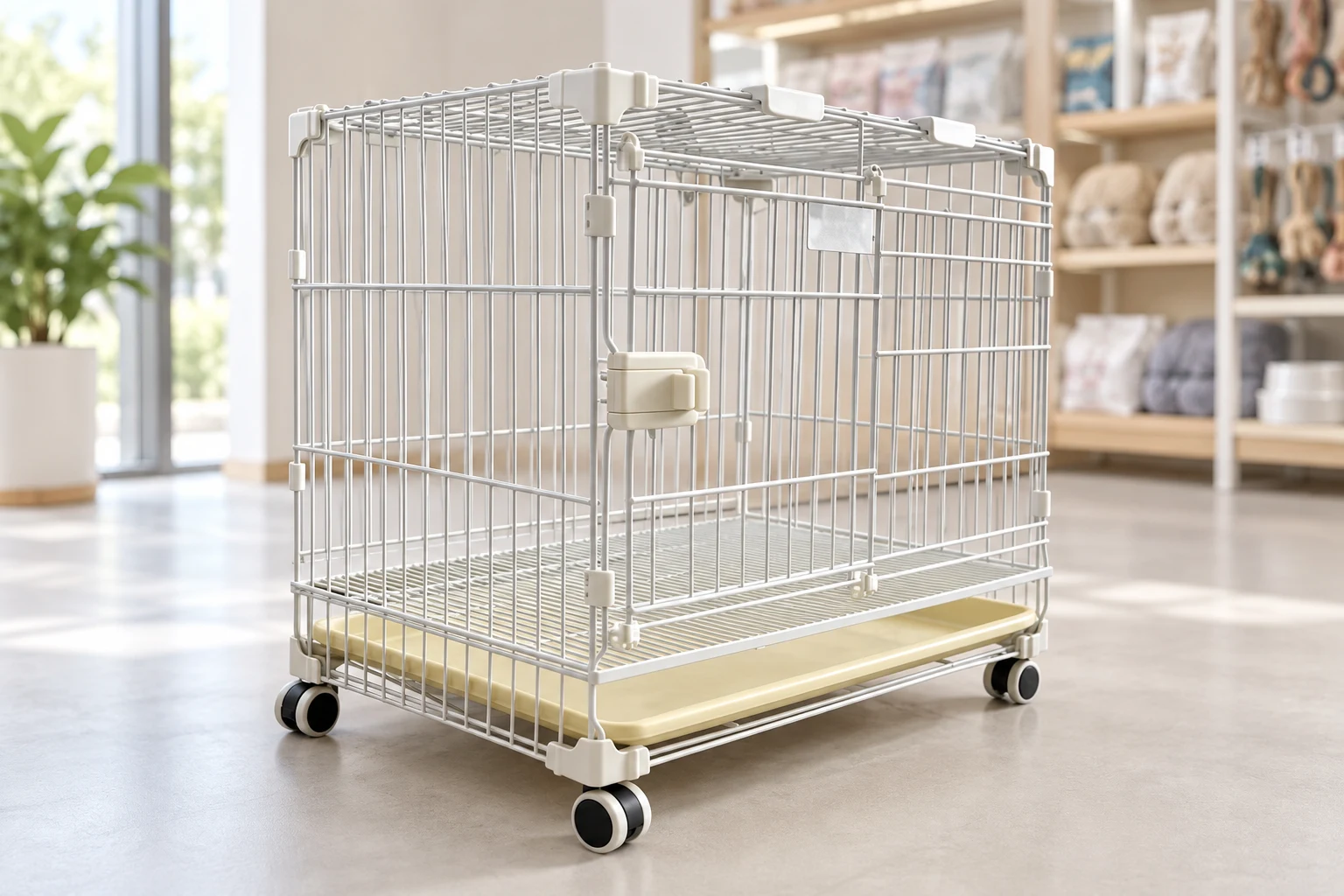
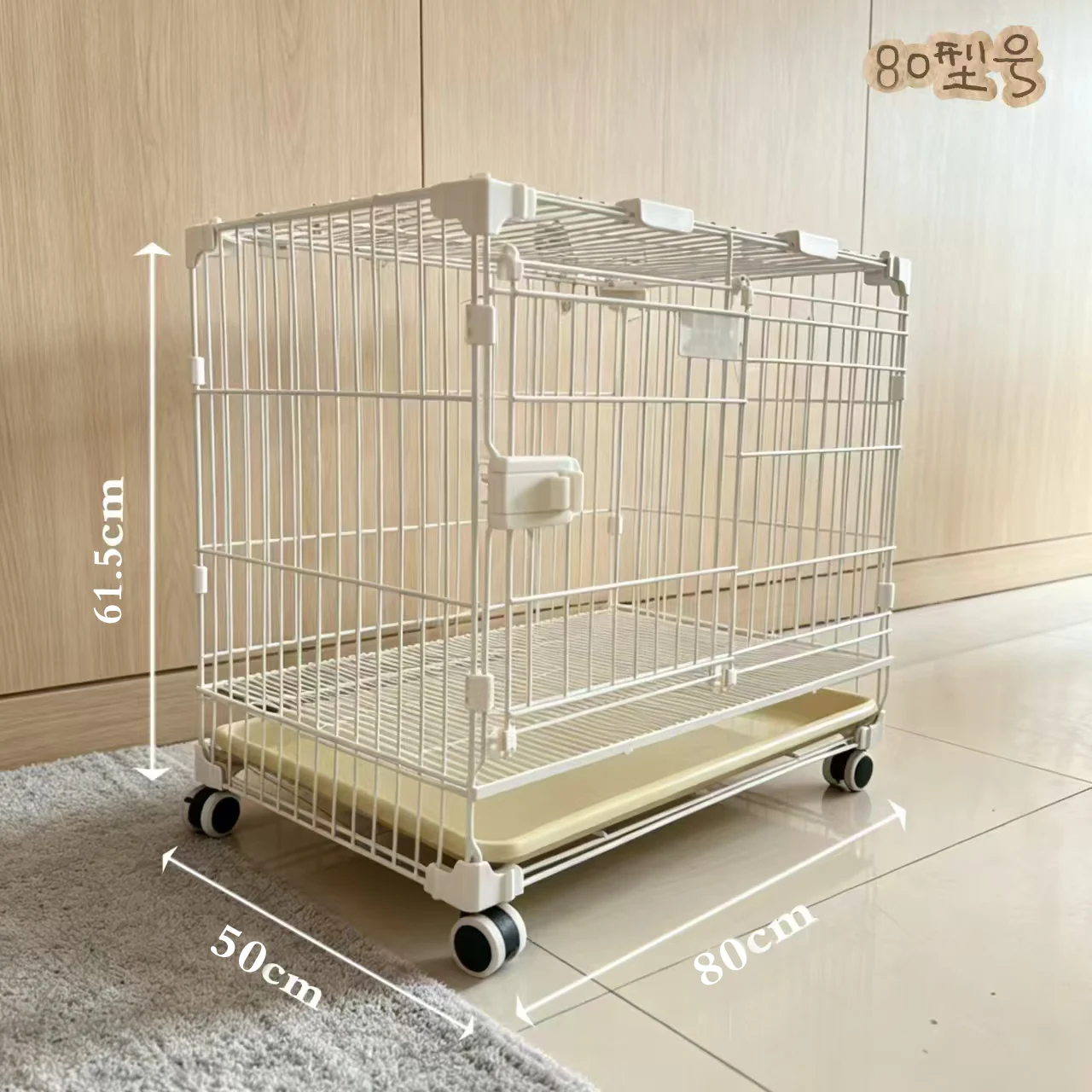
The cover and receiving-area images are AI-generated scenes based on the supplied product photograph. They illustrate possible presentation contexts, not actual customer locations. The original reference photograph is included for comparison; approve the physical sample for exact product details.
Where the 80 model sits in the sliding-door range
The supplied factory quotation lists three sliding-door sizes. The measurements below are arranged consistently as overall length × width × height, even though the source sheet records length × height × width.
- 60 model: 60 × 43 × 55 cm; net weight 8.2 kg; gross weight 8.8 kg.
- 70 model: 68 × 47 × 58 cm; net weight 9.2 kg; gross weight 9.9 kg.
- 80 model: 80 × 50 × 61.5 cm; net weight 10.7 kg; gross weight 11.6 kg.
Each is listed as one unit per carton. The quotation sheet gives carton measurements of 80 × 66 × 11 cm for the 60 model, 68 × 60 × 11 cm for the 70 model, and 60.5 × 57 × 11 cm for the 80 model. Because carton measurements affect freight planning, confirm the dimensions and gross weight against a currently packed sample before booking a shipment.
These figures describe overall external size. They do not provide usable interior dimensions, opening clearance, wire spacing or an animal-weight recommendation. The differences between model lengths can help structure a catalog, but they do not determine suitability for a particular animal.
What the largest listed model adds to a range
For a distributor already considering the 60 and 70 models, the 80 model extends the listed length from 68 cm to 80 cm. Its width and height also increase in the source specification. That gives buyers a clear reason to evaluate it as a separate size option, with dedicated photography, dimension information and stock code.
The pictured cage has a pale silver wire structure, light-colored plastic connectors and latch, a sliding front access panel, a raised wire floor, a pale yellow tray and black-and-white caster wheels. Record the observed configuration when reviewing the sample. Ask the supplier to confirm whether these colors and components match the current standard order.
Door style should stay in the item name. A listing called only “80 cm dog cage” leaves room for confusion with the swing-door version. Browse the complete sliding-door cage range to keep the construction and size variants together in the assortment.
Plan assortment depth before committing to stock
Start with a product role
Decide whether the 80 model fills a real gap in the range. Review customer enquiries, current sales mix, display or warehouse space, and the landed-cost assumptions for this carton. If a smaller model already addresses most demand, the largest option may make more sense as a sample or limited initial stock position. The right decision depends on the distributor’s own order history.
Keep model codes and actual dimensions together
Use labels such as “sliding-door / 80 model / 80 cm overall length” in quotes and receiving records. Keep “70 model / 68 cm” equally explicit. This helps prevent an item name, product photo and dimension table from drifting apart when sales materials are updated.
Build a practical comparison view
A comparison chart should show model reference, length, width, height, net weight and carton information in fixed columns. State that the dimensions are external. Link the chart to individual product pages so a buyer can inspect each image and request sample-specific details. Our wholesale cage sizing guide explains the measurement questions a buyer can use when checking a proposed range.

Questions to settle on the actual sample
Use the product image to identify the configuration, then inspect the sample before publishing technical claims. Confirm the sliding panel’s travel and latch operation, the tray’s fit, the supplied wheel arrangement, and the finish. If your sales channel requires wire diameter, spacing, coating data, a load rating or certificates, request supporting information from the factory rather than estimating from a photograph.
Check the packed carton separately from the assembled product. Verify the current carton size, gross weight, protection, markings and included parts. The quotation values are useful order references, but the packed sample is the evidence needed for a specific shipment plan. A thin carton measurement alone does not prove a particular folding method or packed configuration.
The caster wheels shown in the image do not make the cage a vehicle restraint or approved travel carrier. Likewise, the external 80 cm length cannot establish dog-breed fit, internal floor area or animal capacity. Keep product descriptions factual and direct suitability questions to the dimensions and sample configuration that have actually been confirmed.
Make the quotation easy to action
Standard products can be discussed from 100 pieces, subject to current availability and confirmation of the final order terms. For a quote, specify “80-model sliding-door cage,” quantity, destination, and any carton or labeling requirements. If your business buys multiple sizes, list each model and quantity separately so the assortment is clear.
Distributors developing a broader assortment can review our dog cage distributor supply information and send the target size mix for discussion. Standard products and custom projects have different specification and quantity discussions; any requested changes to colors, labels, packaging or structure should be described separately.
The 80-model sliding-door cage is worth evaluating when a wholesale range needs a larger listed size with its own product identity. Compare the documented dimensions, review the packed sample, and agree on the exact configuration before adding it to your catalog. For enquiries, email [email protected] with the model, quantity and destination.